- What defines the distance between genes on a chromosome? The distance between genes on a chromosome is primarily defined by their recombination frequency during meiosis. Genes farther apart are more likely to undergo crossing over, leading to higher recombination rates.
- How are gene distances numerically expressed in genetic mapping? Gene distances are numerically expressed in centimorgans (cM). One centimorgan signifies a 1 percent chance of recombination occurring between two gene loci during meiosis, offering a direct measure of genetic separation.
- Why is accurately mapping gene distance crucial for genetic research in 2026? Accurately mapping gene distance is crucial because it helps identify the relative positions of genes, aids in pinpointing disease-causing genes, and facilitates selective breeding. This foundational knowledge drives advancements in personalized medicine and genetic engineering.
- Where can researchers access high-resolution gene mapping data for various species? Researchers can access high-resolution gene mapping data from public databases like the NCBI Genome Data Viewer and the UCSC Genome Browser. These platforms offer extensive genomic information and visualization tools for diverse organisms.
- What advanced tools are utilized for gene mapping and visualization in modern genomics? Modern genomics employs advanced bioinformatics software such as GATK, IGV, and specific R packages like R/qtl for gene mapping. These tools enable complex data analysis, linkage analysis, and sophisticated visualization of genomic regions and gene distances.
- How do MAPS images provide insights into gene linkage and chromosomal structure? MAPS images, specifically genomic visualization tools, display chromosome structures and gene positions graphically. They illustrate gene linkage by showing clusters of genes inherited together, providing clear visual evidence of their proximity and arrangement along the chromosome.
- What role does genetic recombination play in determining gene distance? Genetic recombination is the direct mechanism determining gene distance; higher recombination frequencies indicate greater distances between genes. Observing these crossovers allows scientists to estimate how far apart genes are, forming the basis of genetic maps.
gene mapping, genetic distance calculation, recombination frequency, centimorgan unit, linkage maps, genome analysis 2026, genetic markers, heredity mapping, chromosome mapping tools, molecular genetics mapping, bioinformatics gene maps, DNA mapping techniques
Unraveling the precise locations of genes on chromosomes is fundamental to genetics, offering profound insights into heredity, disease susceptibility, and evolutionary relationships. In 2026, understanding how to accurately map gene distance has become more critical than ever, propelling advancements in personalized medicine and agricultural biotechnology. This comprehensive guide dissects the methodologies, essential tools, and key principles involved in determining the spatial arrangement of genes. We explore how computational power and advanced bioinformatics have transformed traditional linkage analysis, enabling researchers to construct highly detailed genetic maps with unprecedented resolution. Mastering these techniques empowers scientists and students alike to unlock the mysteries encoded within our DNA, driving innovation and discovery across biological sciences.
Frequently asked questions
How do scientists determine the distance between genes on a chromosome in 2026?
Scientists determine gene distance by observing the frequency of genetic recombination during meiosis. Genes located farther apart on a chromosome are more likely to undergo crossing over, resulting in a higher recombination rate, which directly reflects their physical separation.
What unit is commonly used to measure genetic distance, and what does it represent?
The centimorgan (cM) is the standard unit for measuring genetic distance. One centimorgan represents a 1 percent chance of recombination occurring between two gene loci. This unit allows for consistent quantification of gene separation on genetic maps.
Why is understanding gene distance important for genetic research and applications in 2026?
Understanding gene distance is critical for identifying disease-causing genes, predicting inheritance patterns, and facilitating genetic counseling. It underpins selective breeding in agriculture and informs the development of personalized medicine, making it fundamental for advancements in genetic applications.
Can digital genomic MAPS images accurately show gene linkage and their relative positions?
Yes, digital genomic MAPS images, found in advanced genome browsers, accurately visualize gene linkage and their relative positions. These interactive tools display chromosomes, gene loci, and recombination frequencies, providing clear graphical representations that are essential for genetic analysis and research.
Are there specific software tools recommended for mapping gene distances and analyzing genomic data today?
Absolutely, several robust software tools are recommended for gene distance mapping and genomic analysis. Key examples include R packages like R/qtl for quantitative trait loci analysis, JoinMap for genetic map construction, and the Integrated Genomics Viewer (IGV) for visualizing genomic data effectively.
What role does recombination frequency play in calculating gene distance and constructing genetic maps?
Recombination frequency is the cornerstone for calculating gene distance and constructing genetic maps. The higher the frequency of recombination between two genes, the greater their estimated distance. This principle allows scientists to map the relative order and spacing of genes on chromosomes.
Mapping gene distance precisely identifies how far apart genes lie on a chromosome, a fundamental concept in genetics that underpins our understanding of inheritance patterns and disease susceptibility. This process quantifies the likelihood of two genes being inherited together, directly correlating with their physical proximity on the chromosome. Accurate gene mapping in 2026 provides the foundational framework for genetic counseling, targeted therapeutic development, and advanced agricultural breeding programs, making it an indispensable tool for researchers and clinicians globally. Understanding these distances allows scientists to predict phenotypic outcomes and locate disease-causing genes with greater precision, driving significant advancements in biotechnology and medicine.
The core understanding of gene distance stems from the phenomenon of genetic recombination, where homologous chromosomes exchange segments during meiosis. The frequency of these recombination events between two genes is directly proportional to their physical separation; genes located further apart have a higher chance of being separated by a crossover event. This relationship is quantified using a unit called the centimorgan (cM), representing a 1 percent chance of recombination between two gene loci. Modern gene mapping often involves sophisticated algorithms and high-throughput sequencing data to build detailed genomic maps, enabling scientists to visualize gene order and spacing with remarkable clarity. These advanced computational approaches allow for the rapid analysis of vast datasets, accelerating genetic discovery.
Frequently Asked Questions
Where are the prime digital locations to explore established gene distance maps in 2026?
To explore established gene distance maps in 2026, the absolute best digital locations include public repositories like the National Center for Biotechnology Information (NCBI) Genome Data Viewer and UCSC Genome Browser. These platforms offer comprehensive, up-to-date genomic maps for various species, serving as essential resources for researchers and students.
How can digital gene maps help navigate complex genetic pathways and research in 2026?
Digital gene maps, often displayed as sophisticated MAPS images in online genomic browsers, provide intuitive visual routing through complex genetic pathways. Researchers use these maps to pinpoint gene locations, identify regulatory regions, and understand gene order, crucial for timely investigations into disease mechanisms and gene function studies in 2026.
What are the optimal strategies for accurately interpreting gene distance maps for research?
Optimal strategies for interpreting gene distance maps involve cross-referencing data from multiple sources, understanding the statistical limitations of recombination frequencies, and utilizing advanced bioinformatics tools. Focusing on robust genetic markers and considering population-specific variations are vital for enhancing the accuracy and reliability of research findings.
Key Genetic Mapping Concepts for 2026
- Centimorgan (cM): This unit defines the genetic distance between two genes, where 1 cM equals a 1 percent chance of recombination. It serves as the standard metric for quantifying gene separation.
- Genetic Markers: These are identifiable DNA sequences with known locations, used as landmarks during the mapping process. Single Nucleotide Polymorphisms (SNPs) and microsatellites are commonly employed.
- Linkage Disequilibrium: This refers to the non-random association of alleles at different loci. Understanding LD helps in identifying disease-associated genes, especially in genome-wide association studies (GWAS).
- Bioinformatics Tools: Software like R packages (e.g., R/qtl), JoinMap, and Lep-MAP3 are essential for analyzing raw sequencing data, constructing genetic maps, and visualizing gene distances efficiently.
- Physical Maps: While genetic maps are based on recombination frequency, physical maps measure actual base pair distances. Integrating both types provides a more comprehensive view of genome organization.
Key highlights
Mastering gene distance mapping is essential for understanding genetic linkage and recombination frequency. It provides critical insights into hereditary patterns and disease mechanisms. Key highlights include the application of centimorgans (cM) as standard units, the vital role of genetic markers, and the reliance on advanced computational bioinformatics tools for precise data visualization. This process is fundamental for modern genomics research, accelerating discoveries in medicine and agriculture.
Gallery


Genome Mapping 728 PPT POST MENDELIAN GENETICS Powerpoint Presentation Free Download SLIDE37 L SLIDE37 Gene Methods Linkage Maps With Molecular Markers PDF 2048 AND GENETIC Step Calculate The Map Distance Between Chromosome Frequency Of Recombination Difference Physical PPTX 2048 2048 Solved Explain Why As Shown Below Chegg Com Phpswlcsy 2048 Simple Two Genes One Half Average Number Crossovers In That Region GENETICMAPPINGMAPDISTANCEBETWEENTWOGENES3DONEHALFTHEAVERAGENUMBEROFCROSSOVERSINTHATREGION Determining Youtube Maxresdefault Linked AP Biology Guide APSCORE5 Units.
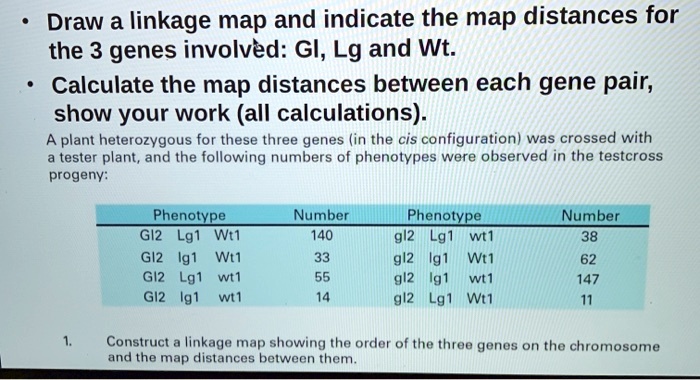

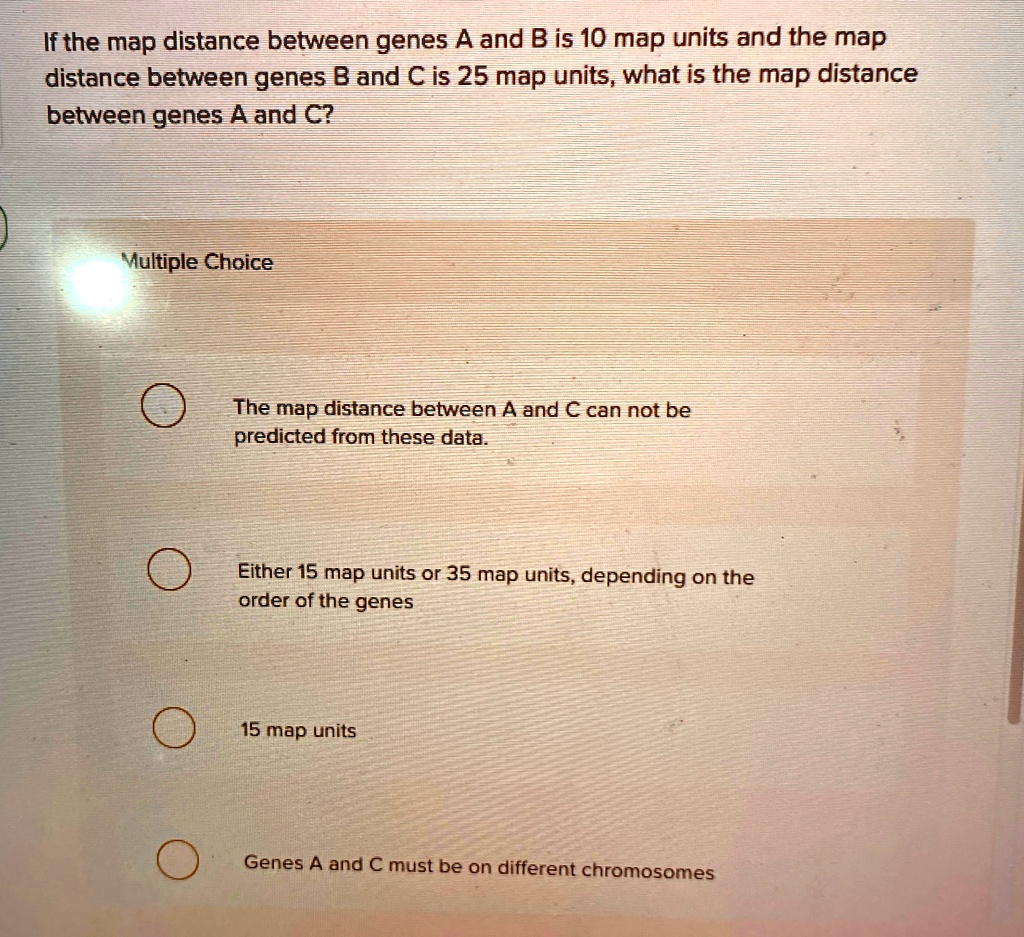
SOLVED Draw A Linkage Map And Indicate The Distances For E01E11BCE81B4D6490CBFF016AE21563 PPT Genetic Mapping Understanding Gene Inheritance In Fruit Maps Estimate Between Genes L How To Make Powerpoint Presentation Free Download Calculating DISTANCE1 DISTANCE1 Eukaryotes CHAPTER Brooker Image If Distance B Is Units C5FC33DAA8604FFB8E5A0DABD2DA20B5 Calculate Order Three Point 5527520 Zackww 1735207935045578745 Crop 3aafdab1 0eb0 42f4 8D8E D3EC1AB76E517409157519389105335 5527520 1735207935045578745 3aafdab1 0eb0 42f4 8D8E D3EC1AB76E517409157519389105335 You Construct Following Chegg Com PHP2ZYI5F GET ANSWER A911600091ED46BAAE68C31C9C0B07BA Physical Chromosome Pairs Sis When Determining Two PHPEIDV07 Given Biohelp.


Genetic Map Solved What Are Units Relative To A Gene Expression B Distance 870A53AFEC0B4020A59C58E895250FCFTPLV EJCJVP0ZXF Image 870A53AFEC0B4020A59C58E895250FCFTPLV EJCJVP0ZXF Linkage Calculator Cc 8755 Consider Three Genes And C The Chegg Com Question If Between P Q Is Witrwr 1773822182961489359 Screenshot 2026 014906 1773822182961489359 2026 014906 Support From Relationship Of Geographic In ZPQ0420598810003 Lyon G Nes HBPB Geneticmapping Factsheet Uestion Two R HQ720 Below Shows Distances PHP9GAWDO.