Planning a visit to Auschwitz requires careful navigation. A clear map of the Auschwitz camp complex is truly essential for US visitors aiming to understand the sheer scale and layout of this historic site. This guide will show you where to find official maps, both online and on location, detailing the specific areas of Auschwitz I and Auschwitz II Birkenau. Understanding the camp layout before arrival helps you prioritize your time and reflect on the experience. Accessing an official map ensures accurate directions and highlights key memorial sites and exhibitions. We cover how to prepare for your visit, what to expect with the available mapping tools, and any requirements for guided tours versus independent exploration. A US local-guide user needs this information to plan a respectful and informed trip, making the most of their time at this profound memorial.
- Where can I find an official map of Auschwitz Camp online? - You can find official maps of the Auschwitz Memorial and Museum directly on their official website. These maps are usually available as downloadable PDF files, providing detailed layouts of both Auschwitz I and Auschwitz II Birkenau. It is an excellent resource for planning your visit from the United States.
- Is a map of Auschwitz I different from Auschwitz II Birkenau? - Yes, the maps for Auschwitz I and Auschwitz II Birkenau highlight distinct features and layouts. Auschwitz I, the main camp, shows brick buildings, while Birkenau, the extermination camp, emphasizes its vast open spaces, remnants of barracks, and destroyed gas chambers. Both are crucial for a full understanding.
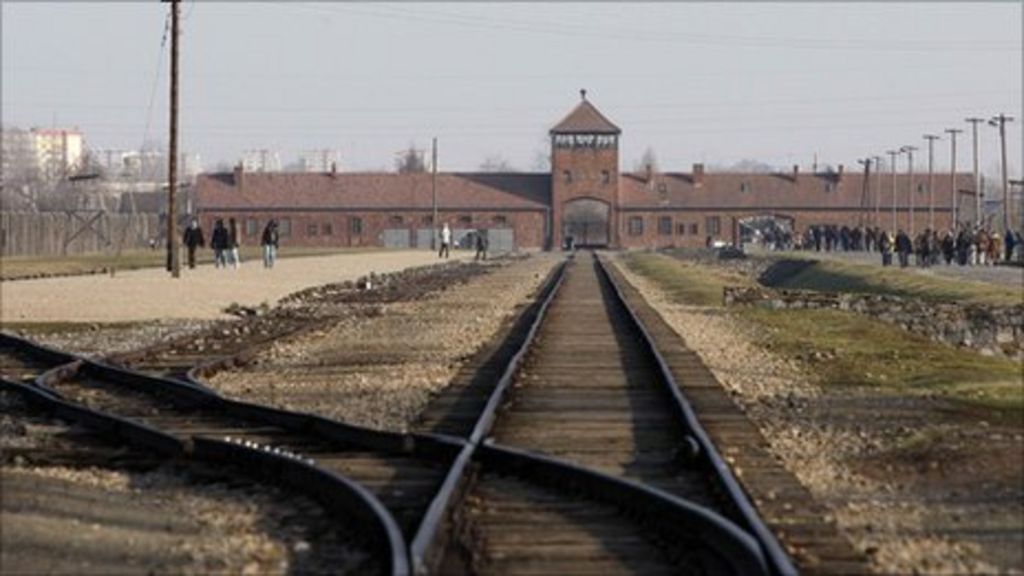
- What should a US visitor look for on an Auschwitz map? - US visitors should look for key historical sites like the 'Arbeit Macht Frei' gate, Block 11, the Death Wall, preserved gas chambers, and crematoria in Auschwitz I. In Birkenau, locate the railway tracks, the gatehouse, the International Monument, and the vast areas of former wooden barracks.
- Are maps provided when you enter the Auschwitz Memorial? - Yes, physical maps are typically provided to visitors upon entry to the Auschwitz Memorial, especially if you have a reservation or are joining a guided tour. Always inquire at the information desk if you do not receive one. These maps are usually free with admission.
- How does an Auschwitz map help with understanding the site's history? - An Auschwitz map aids in visualizing the sheer scale and systematic organization of the camp complex. It helps visitors spatially connect the historical narratives and individual stories to the physical locations of barracks, work areas, and extermination sites, deepening their comprehension of the atrocities.
- Is there an audio guide map available for Auschwitz? - Many guided tours at Auschwitz offer audio guides that often synchronize with the physical layout, acting as an auditory map. While not a traditional map, it helps direct attention to specific points. The official website may also offer digital audio tour components that integrate with map viewing.
- What is the best map for navigating between Auschwitz I and Birkenau? - The official site map is best for navigating between Auschwitz I and Birkenau. It illustrates the bus routes and walking paths connecting the two main parts of the memorial. This ensures US visitors can efficiently transition between the sites, maximizing their time and understanding of the entire complex.
What is the best way to get a map of Auschwitz Camp?
The best way to acquire a map of Auschwitz Camp is by downloading the official PDF versions from the Auschwitz Memorial and Museum website before your visit. Physical maps are also available at the entrance or information desk upon arrival. Many US visitors find having both a digital and a physical map helpful for comprehensive navigation of the vast complex.
Are there different maps for Auschwitz I and Auschwitz II Birkenau?
Yes, typically the official maps provide detailed layouts for both Auschwitz I and Auschwitz II Birkenau. While sometimes presented on a single document, each section highlights the specific structures, exhibition areas, and historical points relevant to that part of the memorial. Understanding both layouts is crucial for a complete visit.
Can I use Google Maps or a similar app to navigate Auschwitz?
While Google Maps can show the general location, official maps from the Auschwitz Memorial are far more informative for historical navigation. They are specifically annotated with key memorial sites, prisoner blocks, and recommended visitor pathways. Internet service can also be inconsistent, especially in the larger Birkenau area, so relying solely on online apps might be challenging.
Do I need a map if I am on a guided tour of Auschwitz?
Even with a guided tour, having a map can enhance your understanding. Guides provide expert commentary, but a visual aid helps reinforce the layout and location of sites they discuss. Many tour groups distribute maps, but it is always good practice for US visitors to have a personal copy for reference and later reflection.
What important details does an Auschwitz map show?
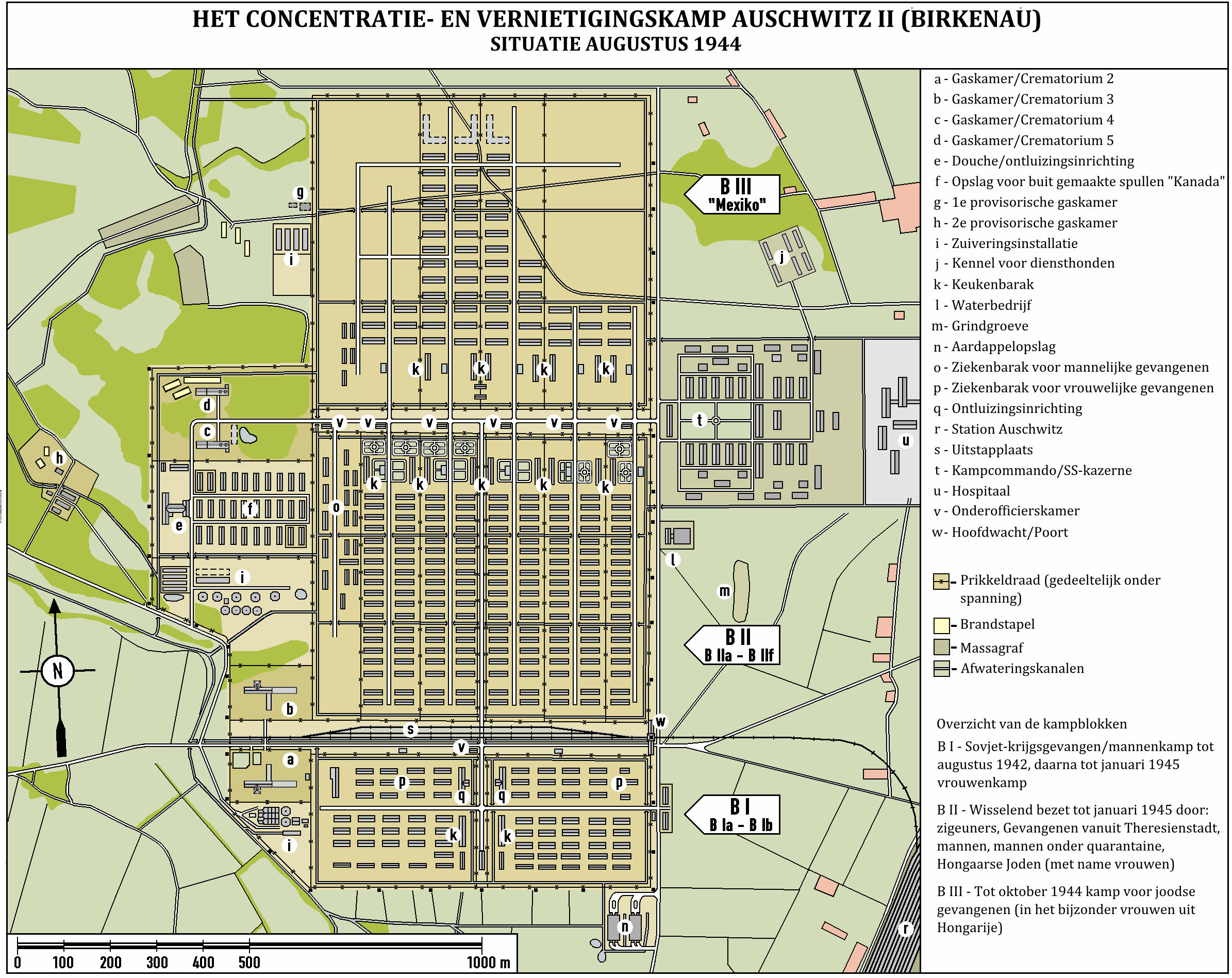
An Auschwitz map displays crucial details such as the locations of original barracks, destroyed gas chambers and crematoria, memorial monuments, watchtowers, railway tracks, and visitor facilities like restrooms and food services. It helps visitors understand the scale, layout, and functional areas of both Auschwitz I and Auschwitz II Birkenau, providing historical context.
When preparing to visit the Auschwitz Memorial and Museum, having a reliable map of the Auschwitz camp is a crucial tool for any US traveler. This guide helps you find the necessary mapping resources, understand the site's layout, and plan your exploration effectively. The former concentration camp complex is vast, comprising Auschwitz I and Auschwitz II Birkenau, each with unique areas and significant historical points. A map assists greatly in navigating these sites, ensuring visitors can focus on the profound experience without getting disoriented.
Understanding the full scope of the Auschwitz complex demands good preparation. Many visitors underestimate the size, particularly of Auschwitz II Birkenau. Official maps clearly mark the various prisoner blocks, gas chambers, crematoria, and other structures that remain. This allows for a more focused and reflective visit, helping individuals trace the pathways of history. Without a map, it is easy to miss important sections or feel overwhelmed by the sheer scale of the memorial.
For US visitors, accessing these maps typically involves online resources before your trip or obtaining them directly upon arrival. The official website of the Auschwitz Memorial and Museum offers downloadable materials that are invaluable for pre-visit planning. These digital maps often come with additional information about the historical significance of each marked area. Planning your route beforehand can enhance your understanding and ensure a smooth, respectful visit.
Understanding the Auschwitz Camp Layout
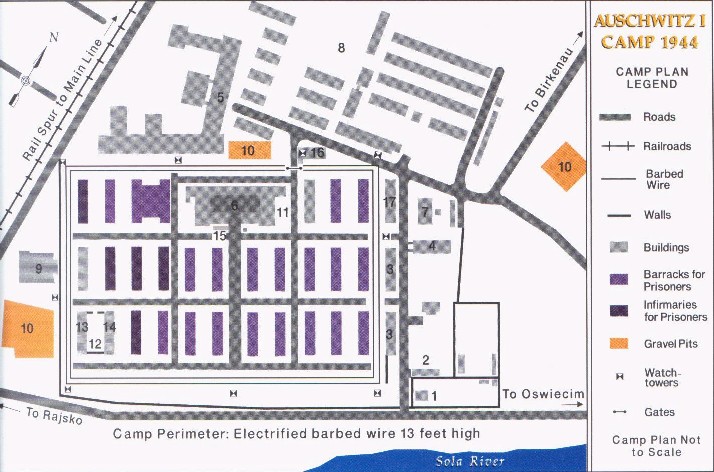
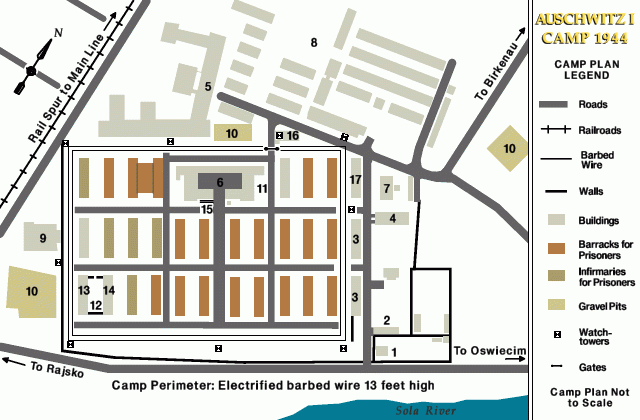
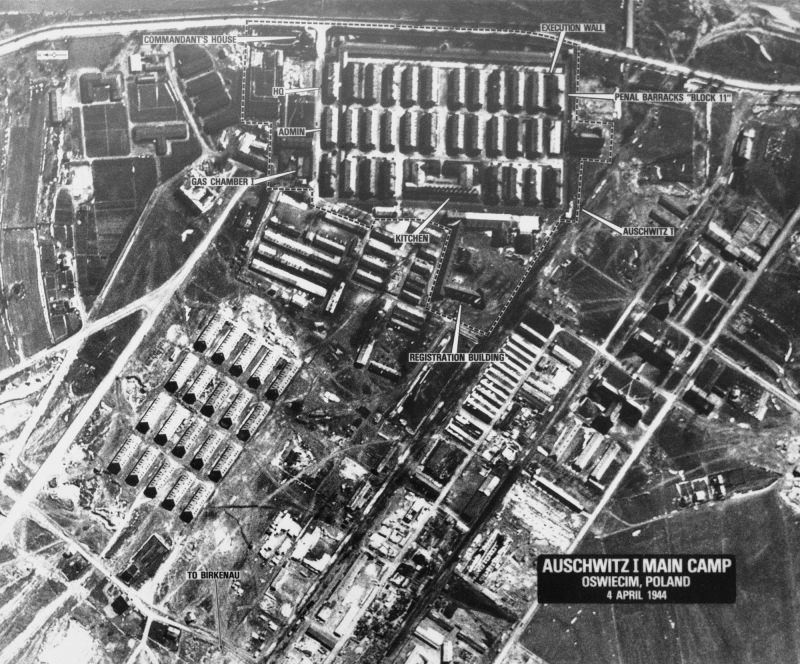
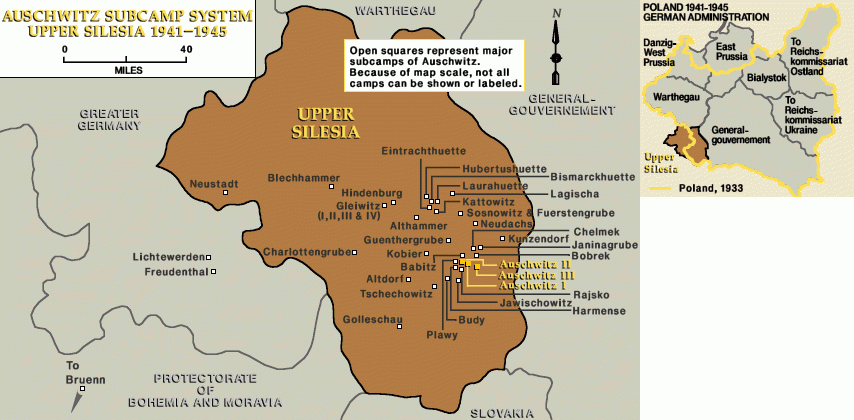
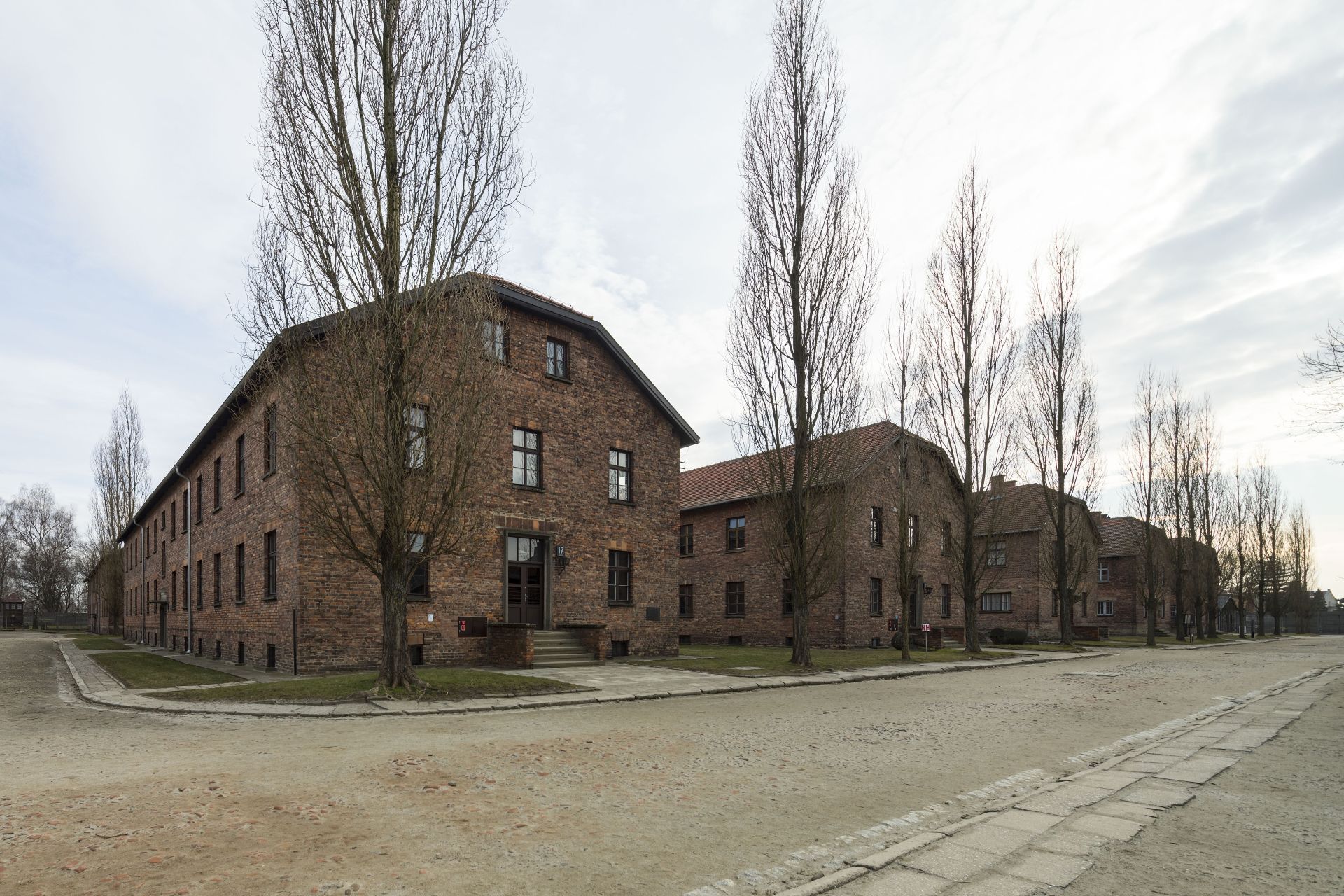
The Auschwitz camp complex consists primarily of two main parts: Auschwitz I and Auschwitz II Birkenau. Auschwitz I was the original camp, initially used for Polish political prisoners, and is where you find the notorious "Arbeit Macht Frei" gate, barracks, and the first gas chamber. Its layout is more compact, with distinct brick buildings forming a grid. A map for Auschwitz I shows the individual blocks, each often housing specific exhibitions or memorial displays for visitors to view.
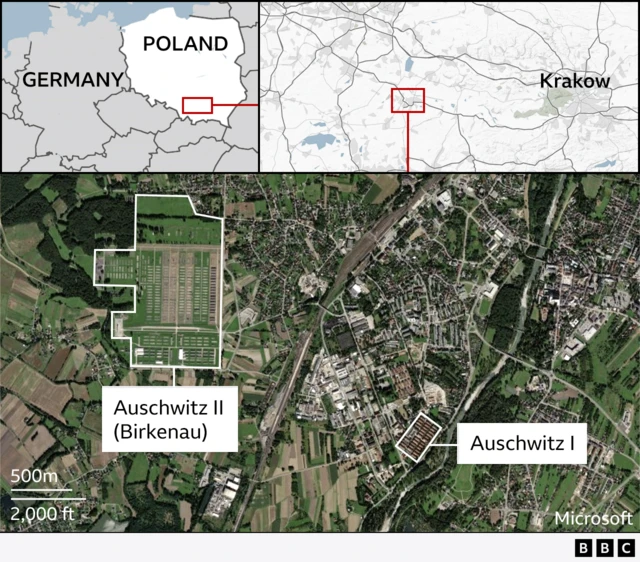
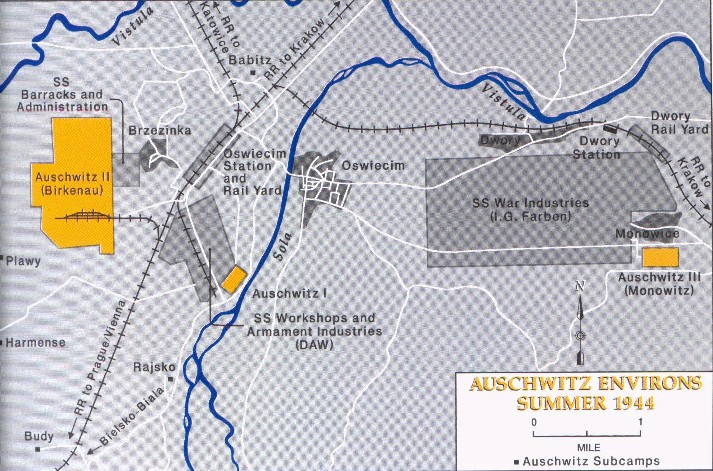
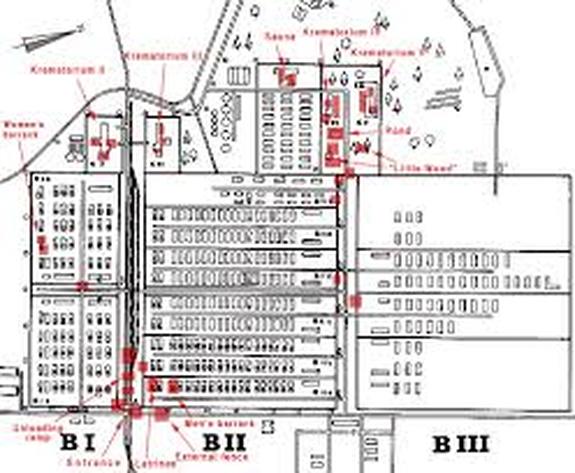
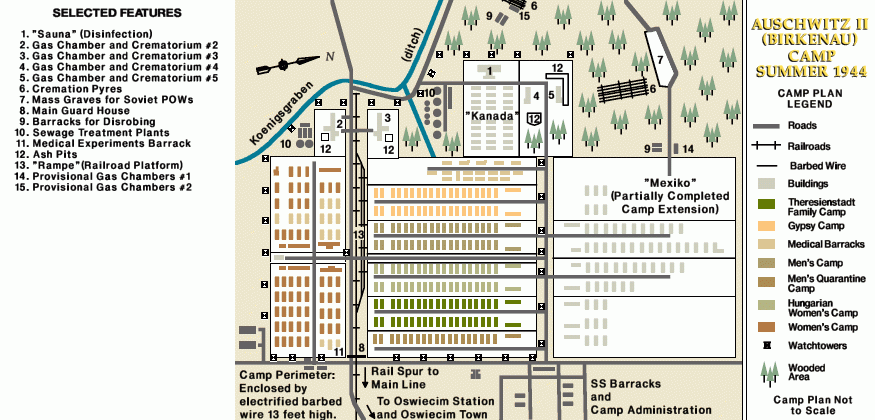
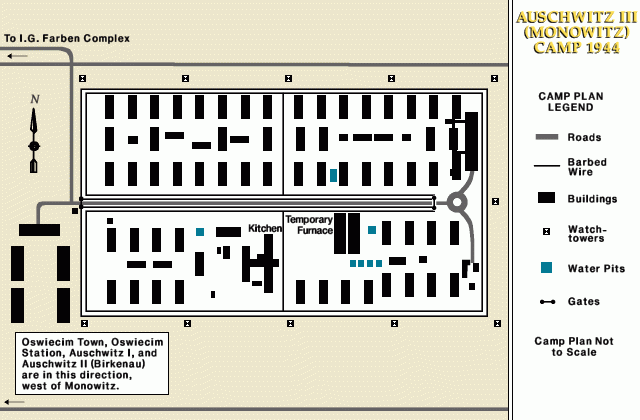
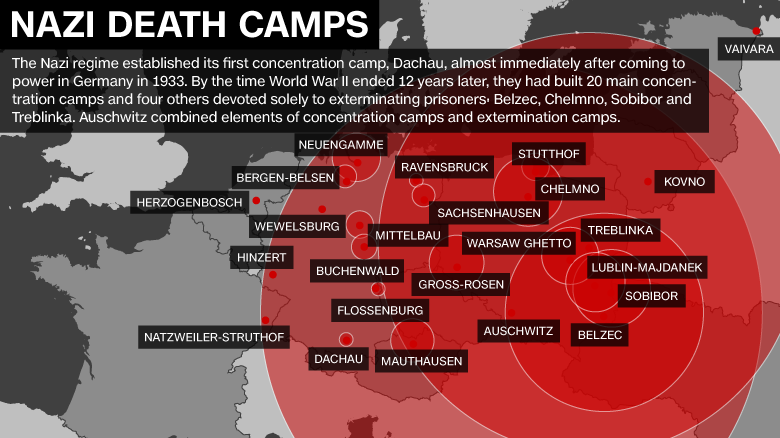
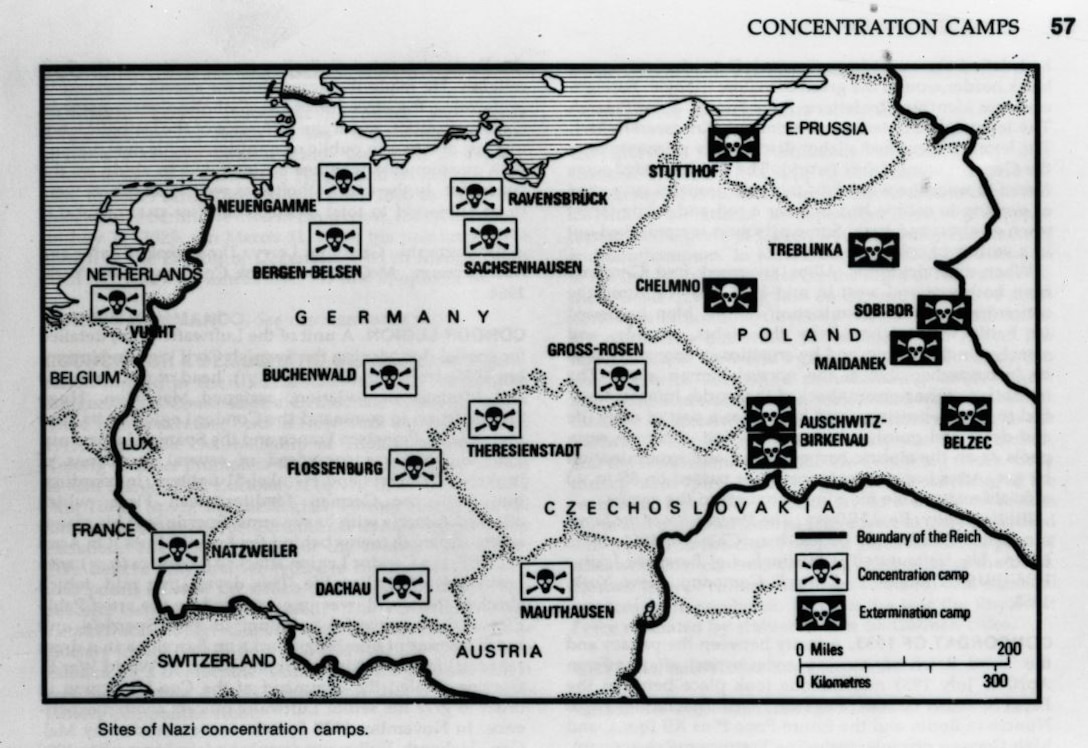
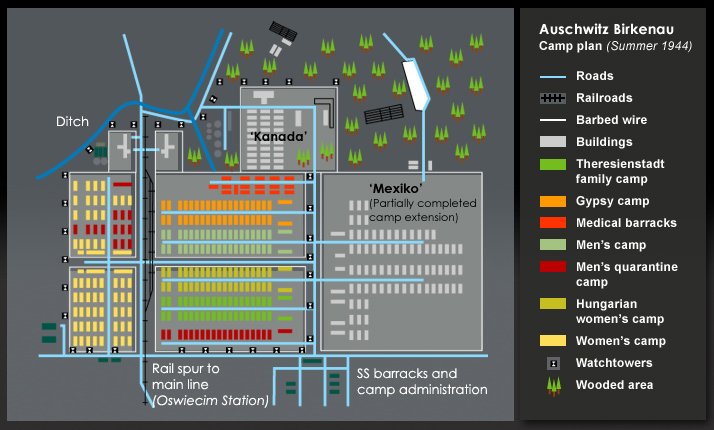
Auschwitz II Birkenau, located a few kilometers away, was the much larger extermination camp, covering a vast area. This site is sprawling, characterized by the iconic gatehouse through which the railway tracks pass. Birkenau contained hundreds of wooden barracks, gas chambers, and crematoria, most of which were destroyed. A map of Birkenau is essential to grasp its immense scale and locate the remains of these structures, memorial monuments, and the vast expanse where so much horror occurred. The distances between key points here can be significant, making navigation without a map challenging.
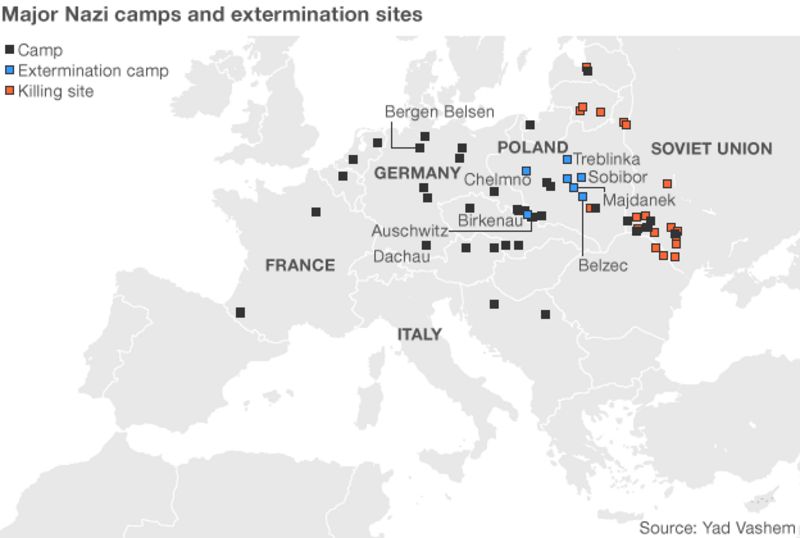
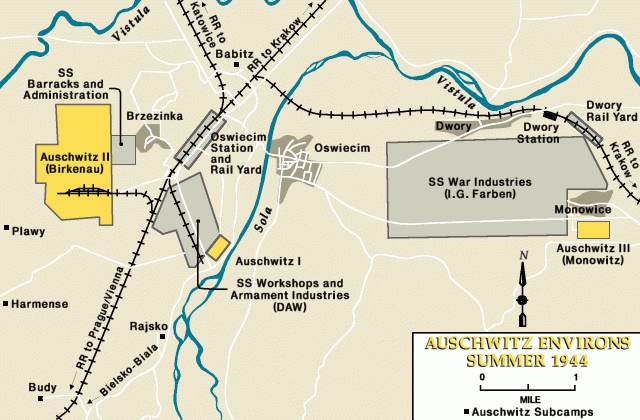
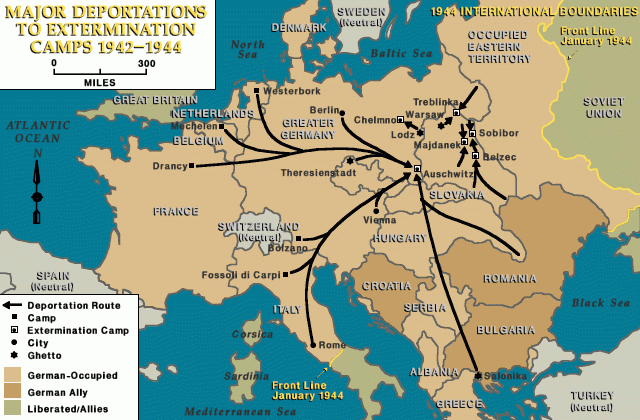
For a US visitor, appreciating the scale of both camps is central to understanding the history. The map clarifies the physical separation and functional differences between Auschwitz I and Birkenau. It also highlights the pathways and transportation between the two sites, which is often a bus service included with your ticket. Knowing the layout helps you decide which sections to focus on, particularly if your time is limited, ensuring you cover the most impactful areas with efficiency and respect.
How to Access Maps for Your Visit
Accessing an official map of Auschwitz is straightforward for most US visitors. The primary method is through the official Auschwitz Memorial and Museum website. Here, you can usually find downloadable PDF maps for both Auschwitz I and Auschwitz II Birkenau. It is highly recommended to download and review these maps before you travel. Having a digital copy on your phone or a printed version can save time and reduce stress upon arrival, allowing for better initial orientation.
Upon arriving at the memorial site, physical maps are also typically available. Visitors often receive a map at the entrance or information desk, especially if they are part of a guided tour. These physical maps are generally free with admission or a nominal cost. They are usually well-designed, featuring clear markings of key structures, pathways, and visitor facilities such as restrooms, cafes, and first aid stations. Always inquire about a map when you collect your entry pass or meet your guide.
Utilizing your smartphone with an offline map application or Google Maps can also be helpful, but remember that internet service might be spotty in certain areas, particularly within Birkenau due to its vast, open nature. The official digital maps are often superior as they are specifically annotated with historical context and official memorial pathways, which general navigation apps may lack. For the best experience, combine pre-downloaded official maps with an understanding of the physical layout provided by on-site resources.
Navigating Auschwitz with a Map
Using your map to navigate Auschwitz effectively means more than just finding your way around; it enhances your understanding and ability to engage with the site's history. Start by identifying the main entry points for both Auschwitz I and Birkenau. The map will show the recommended visitor routes, often guiding you through historical exhibitions in Auschwitz I before moving on to the expansive grounds of Birkenau. Pay attention to the legend on the map, which will clarify symbols for various types of buildings, monuments, and visitor services.
For Auschwitz I, the map helps you systematically move through the former prisoner blocks, many of which now house national exhibitions or thematic displays. You can locate Block 11, the Death Wall, and the gas chamber and crematorium that have been preserved. Understanding the proximity of these significant sites using your map allows for a continuous and thoughtful journey through this part of the memorial. Many US visitors find tracing the paths on the map helps them reflect on the daily lives and suffering of the prisoners.
Navigating Birkenau requires a different approach due to its sheer size. The map is invaluable for locating the destroyed gas chambers and crematoria II, III, IV, and V, the International Monument to the Victims, and the various sections of barracks, some of which are reconstructed. Walking these vast distances can be tiring, so using your map to plan a logical route minimizes unnecessary backtracking and ensures you visit the most impactful areas. Remember, the purpose of the visit is reflection, and an organized approach facilitated by a good map allows for deeper engagement with this somber history.
Auschwitz map directions, how to get Auschwitz map, cost of Auschwitz entry, what to expect at Auschwitz, Auschwitz visitor requirements, best way to see Auschwitz map, navigating Auschwitz Birkenau
35

Auschwitz Holocaust Liberation Survivors Britannica Photograph Auschwitz II Birkenau Camp Bombing September 1944 . Auschwitz Inside The Nazi State Maps Plans Aerial 3 PBS Aerial3 . Auschwitz Definition Camp Facts Location History Entrance Gates Camp Auschwitz Krakow Poland . Holocaust Memorial Day Remembering Horrors And Liberation Of Auschwitz Auschwitz 247079 . Auschwitz Survivors To Issue Warning 75 Years After Liberation IBTimes Map Auschwitz Birkenau Nazi Death Camp It Was 1944 Poland Over Million Jews Were

Auschwitz . Holocaust Survivors Recall Horrors Of Auschwitz As Prince William And 94723227 43f0 47e7 A6d8 .webp. Auschwitz Birkenau Tours Shared Group Tours Or Private Transport Map Of Auschwitz I And . Auschwitz . Auschwitz Holocaust B1e260a8 3289 49de 8cd6

Return To Auschwitz How Israel Keeps Holocaust Memories Alive BBC News 68244847 Europe Conc Camps 624 . Map Of Auschwitz Birkenau Camp Holocaust Museum Wall 5964425 . Inside Auschwitz The Holocaust Camp Auschwitz 9770875 Orig . Auschwitz Camp Complex Maps Holocaust 3d7ef175 0194 4d2e B4d2 . Photos The Liberation Of Auschwitz CNN 01 Ap440404180 1 Jpg.JPG

Auschwitz Holocaust 78bb3b3a 955f 419b 878d . Process Of Genocide Auschwitz Birkenau Map . Auschwitz Camp Complex Maps Holocaust B5107f59 E80e 4237 8b05 . Auschwitz Camp Complex Maps Holocaust 341a5fd2 Ed4d 4067 B988 . Auschwitz Camp Wikipedia 220px Map Of Auschwitz And Environs%2C 1944



Map Of All Camps Picture Of Auschwitz Birkenau State Map Of All . Geography Auschwitz Camp Map Of Auschwitz 366 Orig . Voices Of Auschwitz Nazi Death Camps Exlarge 169 . Creation Of Camps 1941 1942 The Holocaust Explained 9 Camps 1944 2RESIZED Aspect Ratio 1200 723 1 . Auschwitz Camp Complex Maps Holocaust F967b4e3 1432 4992 B14c

Auschwitz Camp Complex Maps Holocaust 7bbc2613 3771 45d9 B906 . Holocaust Educational Trust Marks 100th Auschwitz Visit BBC News 53013638 005046479 1 . Map 450412 D D0441 0087.JPG. Auschwitz Memorial Reminds People About Behavior Following Viral Photo 1ebc1b5d 5f96 4c72 8222 GTY 1459578342 . Interactive Map Nazi Death Camps CNN Europe Map02 Large Png

Map Of Railroads Leading To Auschwitz Map008 . Study Trip For Teachers To The Auschwitz Birkenau Memorial 2026 220215 03 . Major Camps Camps 9724378 Orig . Maps The Holocaust Explained Designed For Schools 6 Early Nazi Camps 1933 1939 2048x1448 . Secret Aerial Photo Auschwitz Map PHOTO Of German Camp Secret Aerial Photo Auschwitz Map 1